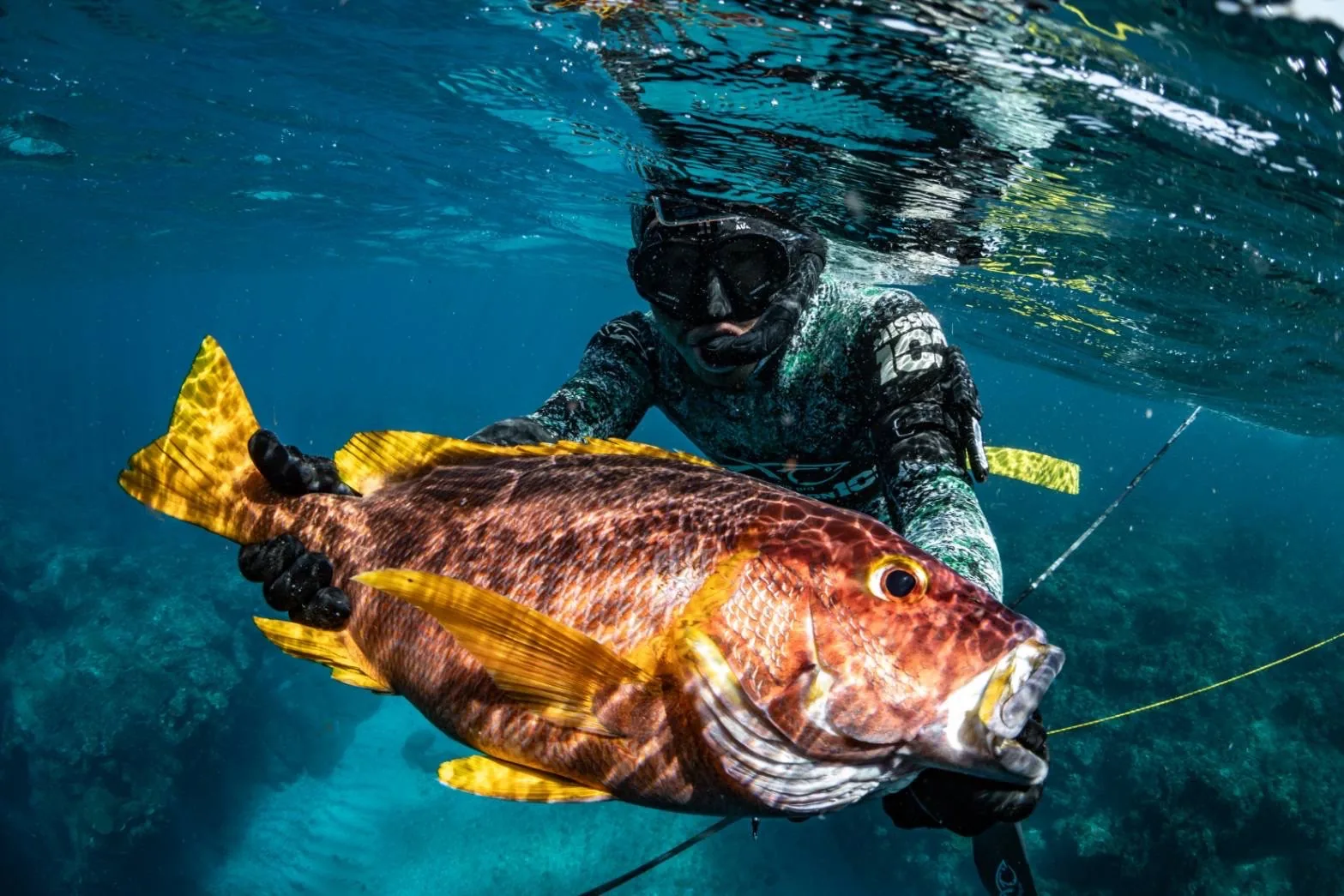
You enter the sea by freediving and take fish with a hand-held yasu. In Japan, bone spear tips turn up in Jomon-period sites, and in the Edo period, alongside the culture of the ama divers, fishers around the country took fish and octopus with the yasu.
Because you choose and take only fish you can see, you never catch unrelated fish the way a net does. Spear only what you will eat. That is the basis of spearfishing today.
You look at the one fish in front of you and decide whether to take it. Small fish and fish carrying eggs can be left alone.
One yasu is all the gear. No snapped line, no sinking weights, no drifting nets.
Facing the sea on one breath, we feel it on our skin: when the seaweed thins, when the fish change and tropical strays appear, when the urchins multiply. That is why we also survey.
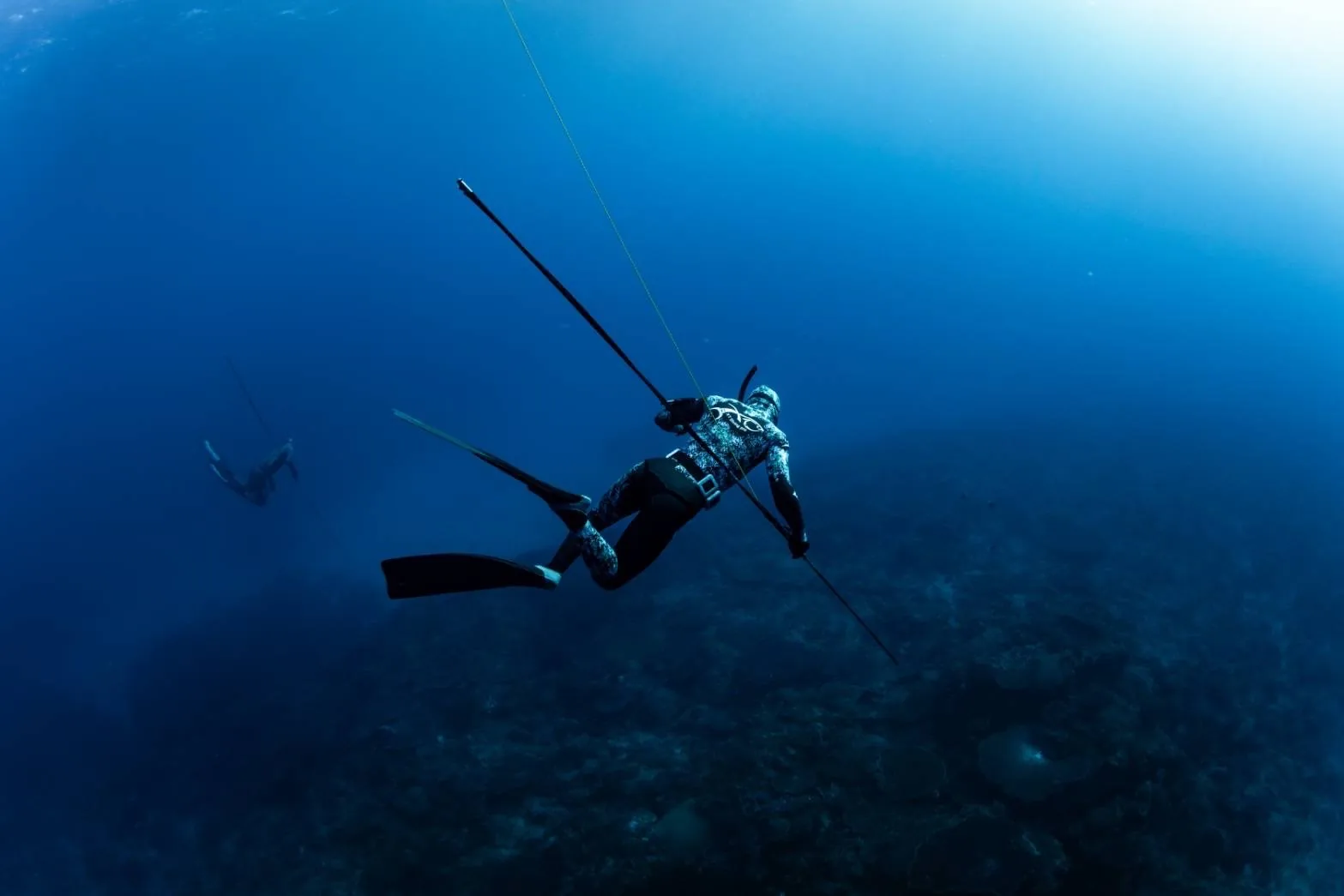
Wetsuit, fins, mask, gloves, weights. In the hand, a yasu. On the surface we put out a float and a flag, to let boats know where we are.
We hold our breath and dive, looking for fish in the shadow of rocks and among the seaweed. We look at the one fish in front of us, decide whether to take it, and thrust with the yasu. While our breath still lasts we return to the surface, recover our breathing, and dive again.
Event dates and sign-ups are on our official LINE account (in Japanese). For press enquiries, or if you are a company, local government, fisheries cooperative or research institution, please use the contact form.
GREEN spearfishers (General Incorporated Association)
MAIL:[email protected]